Native vs. Cross-Platform Mobile Apps: What Startups Need to Know
An in-depth comparison of Flutter, React Native, Swift, and Kotlin to help you decide the best approach for your mobile app MVP.
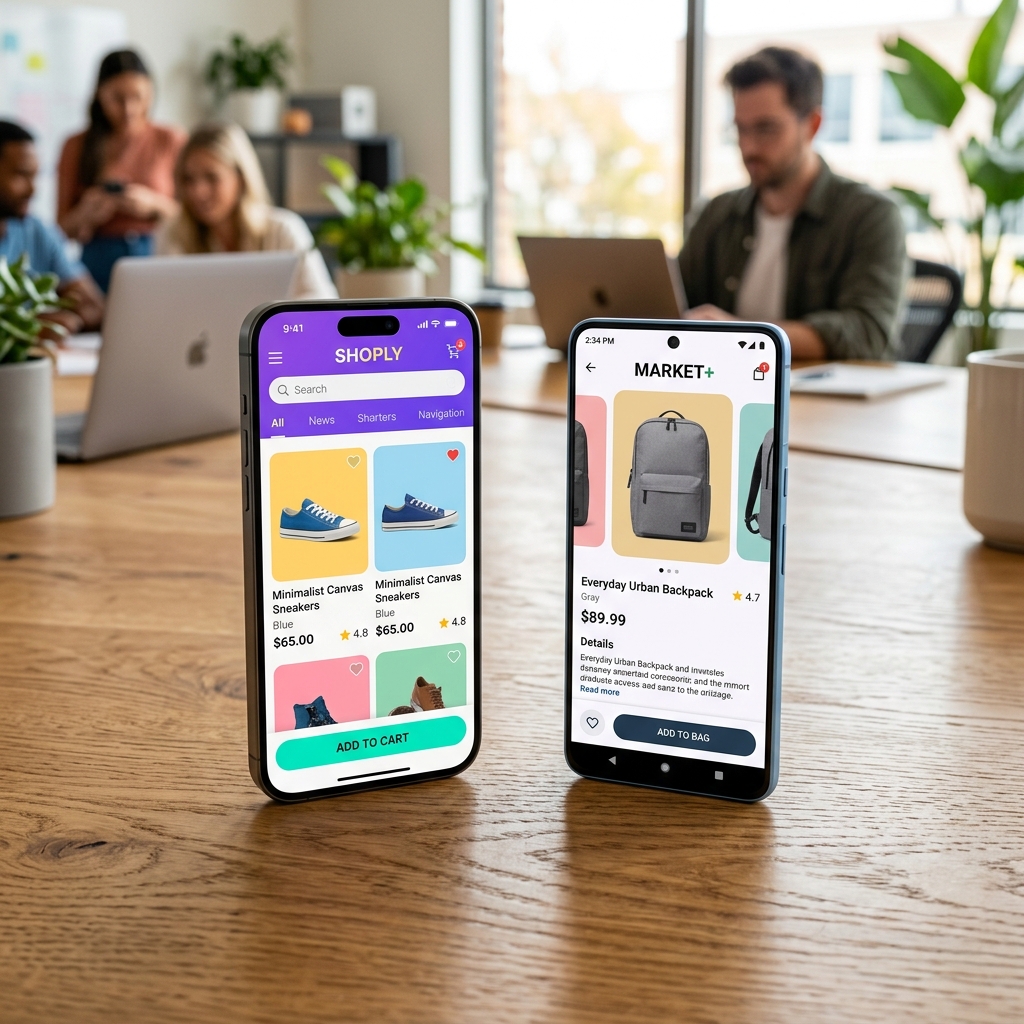
When launching a new mobile application, startups face a critical decision: should they build native applications separately for iOS and Android, or use a cross-platform framework? This decision impacts the development budget, time-to-market, and the final user experience.
Understanding Native Development
Native development involves writing code specifically for a single operating system. For iOS, developers use Swift or Objective-C. For Android, they use Kotlin or Java. Because the code is written in the platform's native language, it interacts directly with the device's hardware (camera, GPS, sensors) and operating system APIs.
Pros: Maximum performance, flawless animations, full access to device hardware, and the best possible user experience tailored to platform conventions.
Cons: High cost (requires two separate development teams), slower time-to-market, and double the maintenance effort.
Understanding Cross-Platform Development
Cross-platform development allows developers to write a single codebase that runs on both iOS and Android. Modern frameworks like Flutter (by Google, using Dart) and React Native (by Meta, using JavaScript) have revolutionized this approach, compiling down to near-native performance.
Pros: Faster development cycles, up to 40-50% cost savings, a single codebase to maintain, and a unified design across platforms.
Cons: Slightly larger app sizes, potential performance bottlenecks in highly complex 3D or graphic-intensive apps, and dependency on third-party libraries for deep hardware integration.
Comparison: Flutter vs React Native vs Native
| Metric | Native (Swift/Kotlin) | Flutter | React Native |
|---|---|---|---|
| Performance | Excellent | Very Good | Good |
| Time to Market | Slow | Fast | Fast |
| Development Cost | High | Medium | Medium |
| Code Reusability | None (0%) | High (90%+) | High (80%+) |
LPG DEV's Technical Opinion
For 90% of startups and MVPs looking to validate their market quickly, we strongly recommend Flutter or React Native. The cost savings and speed advantage are too significant to ignore, and modern cross-platform frameworks deliver performance that is indistinguishable from native apps for most use cases (e-commerce, delivery apps, social networks, dashboards). We reserve Native development exclusively for apps requiring intensive graphic processing (games), complex hardware integrations, or highly specific platform features.
Need help choosing the right approach for your app? Check out our Mobile App Development services to start your project today.