The Ultimate Guide to API Development and Integration for E-commerce
Learn the best practices for designing robust APIs, choosing between REST and GraphQL, and integrating secure payment gateways in e-commerce.
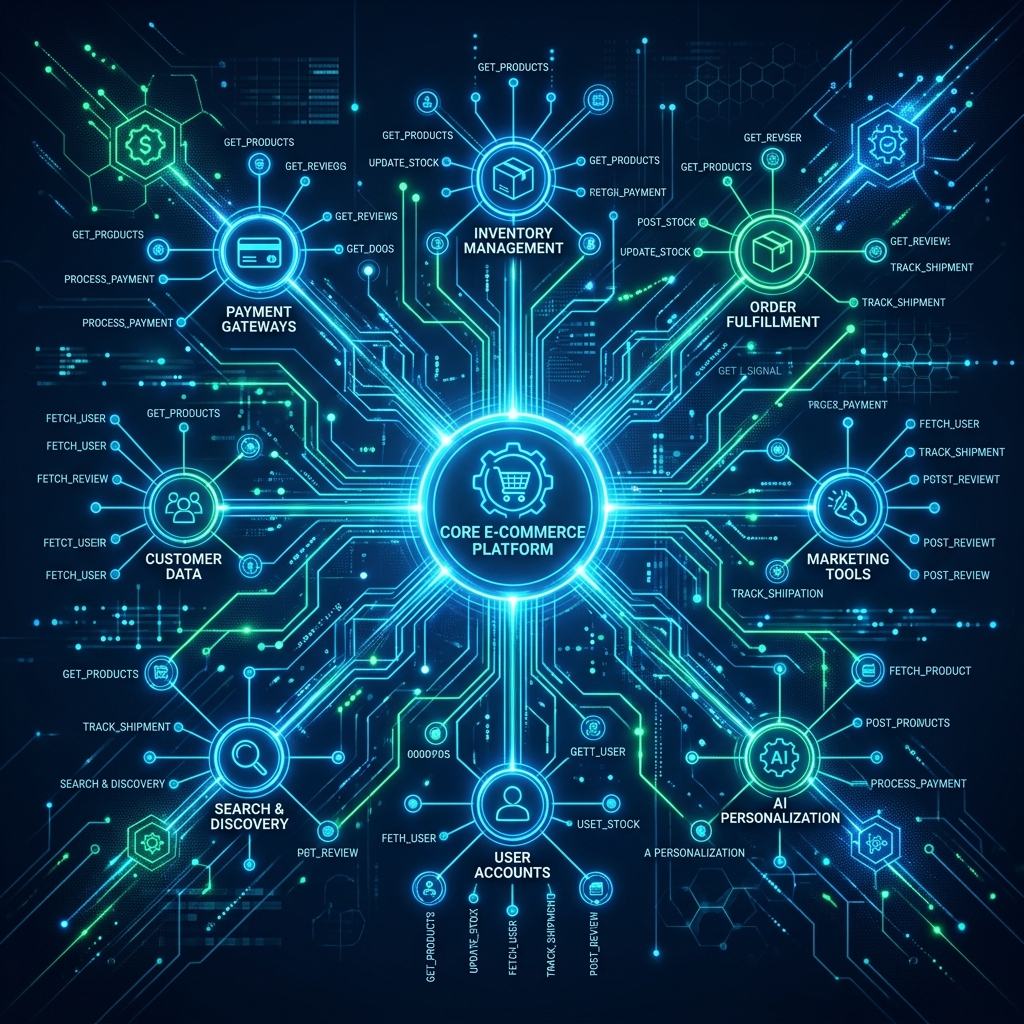
In modern e-commerce, the backend API is the digital nervous system of your business. It connects your web storefront, mobile application, payment gateways, CRM, and inventory management systems into a cohesive ecosystem. A poorly designed API can lead to slow load times, security breaches, and lost sales.
REST vs. GraphQL for E-commerce
When designing an API, developers primarily choose between REST (Representational State Transfer) and GraphQL.
- REST APIs: Use standard HTTP methods (GET, POST, PUT, DELETE) and expose fixed endpoints for different resources (e.g.,
/api/products,/api/orders). REST is reliable, heavily standardized, and highly cacheable, which is excellent for product catalogs. - GraphQL: Developed by Facebook, GraphQL allows clients to request exactly the data they need in a single query. Instead of hitting multiple REST endpoints to load a product page (product details, reviews, related items), a mobile app can fetch everything at once using GraphQL.
Which should you choose?
| Feature | REST API | GraphQL |
|---|---|---|
| Data Fetching | Fixed data structures (Over/Under-fetching common) | Flexible (Fetch exactly what is needed) |
| Caching | Excellent built-in HTTP caching | Complex to cache at the network level |
| Learning Curve | Low | High |
Integrating Payment Gateways Securely
Payment integration is the most sensitive part of an e-commerce API. Whether integrating Stripe, PayPal, or CMI (for Moroccan businesses), security must be paramount.
- Never store credit card details: Always use tokenization. The client sends card details directly to the payment gateway, which returns a secure token to your API.
- Implement Webhooks: Payment statuses change asynchronously (e.g., a delayed bank transfer). Your API must implement secure webhook endpoints to listen for status updates from the payment provider.
- Rate Limiting & Idempotency: Prevent double-charging by implementing idempotency keys on checkout endpoints. Use rate limiting to protect against brute-force card testing attacks.
LPG DEV's Technical Opinion
At LPG DEV, we recommend a hybrid approach for e-commerce platforms. We use REST APIs for public product catalogs to leverage aggressive edge caching (CDN), ensuring blazing fast load times for shoppers. However, for complex client dashboards and mobile applications where bandwidth efficiency is key, we wrap our services in a GraphQL layer. Furthermore, we mandate strict idempotency and webhook signature verification for all payment flows.
Is your business ready for a secure, scalable API? Discover our API Development & Integration services.